
Our News
Industry Insights & Corporate News
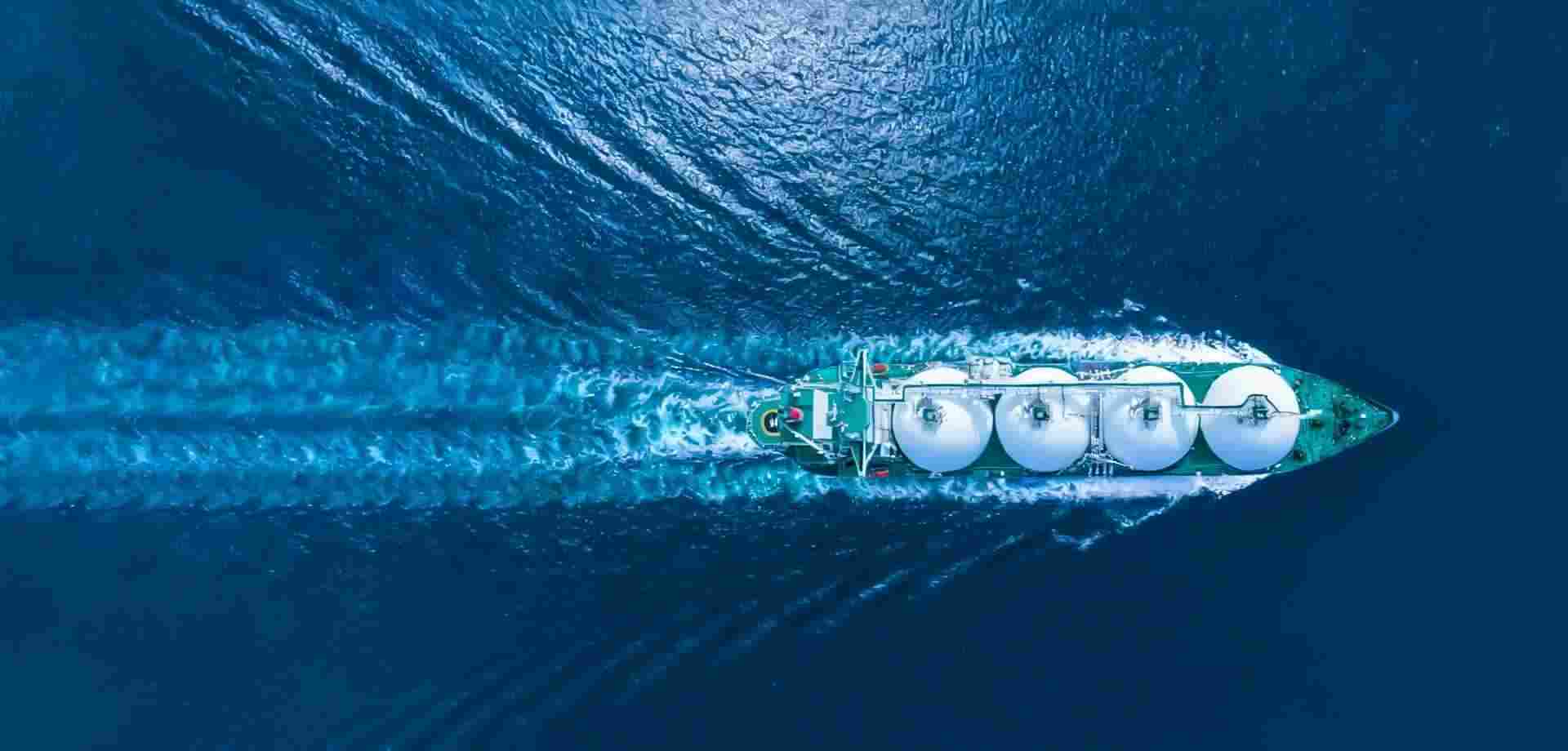
Dichloromethane Exporter for Global Market
The export specification for dichloromethane (DCM, CAS 75-09-2) is not a single property set but a grade-specific matrix that reflects the solvent’s final processing role. Under the harmonized system code 2903.12, bulk exporters differentiate technical grade, vapor degreasing grade, pharmaceutical grade, and polymer-grade DCM through four analytical parameters: gas chromatographic purity by ASTM D6806, water content by ASTM E203, nonvolatile residue by ASTM D1353, and acidity as hydrogen chloride by ASTM D1613. The liquid has a density of 1.325 g/cm³ at 20 °C and a vapor pressure of 47.4 kPa at the same temperature, which places strict controls on transfer pumps and storage tank breather systems to prevent volatile organic emissions. Water separation from DCM is rapid because the solvent forms an upper aqueous layer in quiescent storage; however, water-extractable stabilizers can partition into the aqueous phase, so export tanks are typically nitrogen-blanketed to 0.5 kPa overpressure and dried to a dew point below −40 °C before loading. The most frequent export quality disputes arise from water intrusion in isotank prior cargo residues, stabilizer depletion in partially filled tanks, and acidity increases from hydrolysis of chlorinated stabilizers in the presence of free water. These disputes are resolved by independent inspection and retest against the same standard methods, not by tolerances based on imprecise field observations.
| Parameter | Technical Grade | Vapor Degreasing Grade | Pharmaceutical Grade | Polymer Grade |
|---|---|---|---|---|
| Purity (area %, ASTM D6806) | ≥99.90 | ≥99.90 | ≥99.99 | ≥99.98 |
| Water (mg/kg, ASTM E203) | ≤100 | ≤150 | ≤50 | ≤50 |
| Nonvolatile residue (mg/kg, ASTM D1353) | ≤20 | ≤10 | ≤5 | ≤10 |
| Acidity as HCl (mg/kg, ASTM D1613) | ≤5 | ≤10 | ≤3 | ≤3 |
| Typical stabilizer package | Cyclohexane at 200–500 mg/kg | Amylene at 50–200 mg/kg plus epoxide at 100–500 mg/kg | No stabilizer or trace amylene | Low-stabilizer formulation with ≤20 mg/kg cyclohexane |
When dichloromethane is used as the extraction solvent for alkaloid purification in a cGMP intermediate plant, the control variable is residual solvent removal rather than extraction efficiency. ICH Q3C classifies DCM as Class 2 with a permitted daily exposure of 6 mg/day and an Option 1 concentration limit of 600 ppm in the drug substance; this means the final drying step, not the initial extraction, sets the production cycle time. Typical extraction trains use a 316L stainless steel falling-film evaporator with evaporation temperature held at 35 °C to 40 °C, well below the solvent boiling point, to prevent thermal decomposition in the presence of plant alkaloids and trace metals. The condenser operates at −10 °C to 0 °C, and the recovered DCM is returned to the extractor with water content controlled at ≤50 mg/kg. Batch-to-batch variance in residual DCM is most often traced to fouling of the evaporator tubes with water-soluble biological matrix; the resulting film thickness increase reduces the overall heat transfer coefficient and leaves unvaporized solvent pockets in the concentrate. Published data for the exact film thickness threshold that triggers residual solvent failure in this specific botanical matrix is limited; production units therefore set delta P across the evaporator as an early-warning limit and clean the tubes when vapor-side pressure drop rises by more than 20% from the clean condition. The solvent is also incompatible with aluminium transfer pumps, zinc fittings, and caustic seals; PTFE or PFA-lined equipment is used throughout the wet end.
How Does Stabilizer Depletion Alter Vapor Degreaser Bath Life Under High Freeboard Velocity?
Open-top vapor degreasing with DCM relies on the solvent’s boiling point of 39.6 °C and high vapor density to maintain a stable condensation zone above the boiling sump. In production-scale units the sump temperature is held between 39.6 °C and 40.0 °C, and the upper freeboard chiller is maintained at −10 °C to −20 °C to condense solvent vapor before it reaches the extraction duct. The design freeboard ratio should be at least 0.75:1; when vertical air velocities exceed 20 m/min at the lip of the degreaser, turbulence strips the vapor blanket and carries entrained droplets into the exhaust, accelerating the loss of low-boiling stabilizers such as amylene. DCM vapor degreasing grades are not unstabilized industrial solvent; the stabilizer package neutralizes hydrochloric acid generated by oxidation and hydrolysis. The bath is monitored by acid acceptance number, and a rise above 0.05 mg NaOH/g is interpreted as depletion of the acid scavenger capacity. Once the acid acceptance capacity is exhausted, the bath pH falls, and carbon steel heating coils corrode at a rate that can exceed 0.1 mm/year in the liquid section. Published data for the exact correlation between freeboard velocity, stabilizer half-life, and acid acceptance drift is limited; field measurements on open-top units show greater variance than laboratory evaporative loss tests because drafts, hoist motion, and work-piece geometry change the local velocity profile. To control the risk, export documentation for vapor degreasing DCM includes the initial amylene and epoxide concentrations, and the customer is instructed to conduct a weekly acid acceptance check using a calibrated titrator.
Vapour Degreaser Inhibitor Chemistry and pH Control
The inhibitor system in DCM vapor degreasing formulations operates in two liquid phases because the water separator continuously removes condensed moisture from the solvent return line. The aqueous phase in this separator is maintained between pH 4.0 and 6.5; when pH falls below 3.5, free hydrochloric acid is present, and the separated water must be neutralized before discharge or recycle. Amylene at 50–200 mg/kg acts as a volatile acid scavenger, while epoxide compounds at 100–500 mg/kg neutralize HCl to chlorohydrin. This dual mechanism creates a processing boundary: amylene is preferentially lost through the degreaser freeboard because of its lower boiling point, whereas epoxide inhibitors are partially extracted into the aqueous separator and are not returned if the water phase is discarded. A bath can therefore show apparently adequate total stabilizer concentration by gas chromatography while its acid acceptance capacity is below the required minimum; this condition produces staining on aluminium parts and pitting on carbon steel internal surfaces. Titanium and stainless steel 316L heat exchangers are specified when DCM is used to clean titanium or high-nickel alloys; carbon steel is removed from the wetted path once acid acceptance exceeds 0.08 mg NaOH/g. The export grade is often blended with the stabilizer package at the terminal, not at the production plant, because the stabilizers can be consumed during bulk storage and isotank transit. Each batch is therefore retested after terminal blending against ASTM D6806 for amylene identification and against ASTM D1613 for acidity, with the certificate of analysis reporting both initial and terminal values.
When Tetrachloroethane Replaces Methylene Chloride in Immersion Stripping of Cross-Linked Coatings
Regulatory restrictions on DCM in paint strippers under REACH Annex XVII entry 59 have forced industrial users to evaluate tetrachloroethane and other chlorinated solvents for immersion stripping of cross-linked polyurethane and epoxy coatings. The substitution is not a drop-in change because DCM boils at 39.6 °C and exerts a vapor pressure of 47.4 kPa at 20 °C, while tetrachloroethane boils at 146 °C and has much lower volatility. Immersion stripping in DCM is performed at 20–30 °C with dwell times of 15–30 min for many cured coatings; replacement solvents require bath temperatures above 60 °C and longer dwell times, which adds thermal stress to heat-sensitive substrates and increases the energy load on the process. DCM’s classification under CLP Regulation (EC) No 1272/2008, Annex VI index 602-004-00-3, as Carc. 1B H350 is the primary use restriction driver, and any exporter must provide an extended safety data sheet with occupational exposure scenarios. Closed-loop immersion systems with carbon adsorption of solvent vapor and nitrogen-blanketed holding tanks are required to meet worker exposure limits; the adsorption capacity of activated carbon for DCM is typically in the range of 10–20 g per 100 g carbon, but published data for the specific carbon type and regeneration cycle is limited. Exporters must also document that the DCM supply contains no added stabilizer that would leave a nonvolatile residue on stripped metal substrates; residual nonvolatile matter by ASTM D1353 is therefore kept below 10 mg/kg for this application.
| Regulatory or technical reference | Relevant clause or value | Export action |
|---|---|---|
| REACH Regulation (EC) No 1907/2006 | Annex XVII entry 59, paint stripper restriction | Confirm end use and obtain written declaration for EU-bound material. |
| CLP Regulation (EC) No 1272/2008 | Annex VI index 602-004-00-3; Carc. 1B H350, STOT SE 3 H336 | Update label and SDS for importers under the same classification. |
| ICH Q3C | Class 2; PDE 6 mg/day; concentration 600 ppm | Pharmaceutical-grade DCM must be accompanied by residual solvent stability data. |
| UN Model Regulations | UN 1593, Class 6.1, Packing Group III | Transport label, placard, packaging instruction for toxic liquids. |
| ASTM test methods | ASTM D6806, ASTM E203, ASTM D1353, ASTM D1613 | Certificate of analysis parameters for every provided lot. |
| ISO management systems | ISO 9001:2015, ISO 14001:2015 | Supplier qualification and environmental management documentation. |
Thermal Degradation Pathways in AlCl₃-Catalyzed Systems
In Friedel-Crafts acylations and chloromethylations run in DCM, aluminium chloride lowers the threshold for solvent degradation sufficiently that even minor temperature excursions in the catalyst charge zone produce methyl chloride and hydrogen chloride in the overhead vent. A production-scale 10,000 L glass-lined reactor with a jacket held at 0 °C to 5 °C during catalyst addition shows measurable HCl in the vent condenser within 30 min when the internal temperature reaches 15 °C. Graphite or silicon carbide heat exchangers are used in the overhead condenser because the condensate pH falls below 2.0 during these excursions; a caustic vent scrubber maintains the discharge pH between 7.0 and 8.5. The solvent feed specification for this service is tighter than the generic technical grade because water above 50 mg/kg increases catalyst consumption and promotes the formation of aluminium hydroxide and aluminium chloride hexahydrate. Published data for the activation energy of DCM decomposition in AlCl₃-catalysed systems is limited; operations therefore set a water limit of ≤30 mg/kg, a catalyst addition time of ≥45 min per 100 kg of charge, and an overhead acid scrubber pH alarm at 8.0. The DCM feed is also filtered through 0.45 µm PTFE cartridge filters to prevent particulate aluminum from entering the recirculation loop.
During interfacial polycarbonate polymerization using DCM as the organic phase, water content below 50 mg/kg and acidity as HCl below 3 mg/kg are required because phosgene hydrolysis at the liquid–liquid interface shifts the aqueous pH and broadens the molecular weight distribution. In a commercial reactor train the aqueous caustic phase is maintained at pH 10.5–11.5; the DCM phase viscosity rises from 0.43 mPa·s at 20 °C to above 1.0 mPa·s as the resin concentration reaches 30 wt%. Centrifugal pumps with mechanically sealed PTFE/PFA wetted parts are specified because DCM swells many elastomer O-rings and packing materials. The critical export lot requirement is low nonvolatile residue because any calcium, sodium, or iron residue is carried into the final optical or medical-grade polycarbonate. Vacuum dryers must reduce residual DCM in pellets to below 1 mg/kg; when the pelletizer water bath is contaminated with dissolved DCM, the dryer outlet concentration consistently exceeds the specification and triggers rejection. Residual DCM migration in the pellet follows Fickian diffusion and accelerates only when the dryer temperature approaches the polycarbonate glass transition of approximately 147 °C; below that temperature the diffusion coefficient drops sharply and the outlet residual DCM approaches a plateau. This application consumes some of the largest export volumes outside pharmaceutical synthesis, but published data for the exact solvent loss distribution across the pelletizer, dryer, and vacuum vent is limited.
Bulk isotank export of DCM is performed in T11 stainless steel tank containers conforming to ISO 1496-3. The transport classification is UN 1593, Class 6.1, Packing Group III, and the tank must display the Class 6.1 toxic substance placard. Before loading, export terminals wash the tank with steam, dry with nitrogen to a dew point below −40 °C, and pressure-test at 150 kPa to exclude leakage. The wetted surfaces are stainless steel 316L or 304 with PTFE gaskets; aluminum, zinc, and galvanized steel are excluded because DCM can form corrosive metal chloride intermediates in the presence of trace moisture. The prior cargo compatibility matrix is critical—residues of strong bases such as sodium hydroxide or potassium hydroxide can promote dichlorocarbene formation and accelerate decomposition, while amines can produce substitution products that alter acidity. In drum export, pharmaceutical-grade DCM is filled into lacquer-lined steel drums of 250 L capacity under nitrogen with an ullage of 10% and a tamper-evident seal. Customs documentation requires the Class 6.1 toxic substance declaration, the REACH registration number for EU destinations, and an analysis certificate that matches the receiving tank or drum batch. The container manifold is blanketed after unloading to prevent moisture ingress during return transit; failing this step creates a corrosion and stabilizer depletion problem on the next DCM loading cycle.