
Our News
Industry Insights & Corporate News
Top Methylene Chloride Suppliers in 2026
The global methylene chloride supply base in 2026 remains concentrated among integrated chlor-alkali and fluorochemical producers that can manage the coproduction ratios of methyl chloride, methylene chloride, chloroform, and carbon tetrachloride across a shared distillation train. In the United States, production-scale tonnage is supplied by Olin Corporation and Occidental Chemical Corporation; in Europe, KEM ONE and Ercros operate chlorinated solvent lines linked to salt electrolysis and ethylene dichloride value chains; in Japan, AGC Chemicals and Tokuyama Corporation supply methylene chloride into electronic and pharmaceutical solvent markets; in India, SRF Limited maintains production integrated with fluorochemical operations. Chinese capacity is dispersed across multiple provincial chlor-alkali operators, but English-language nameplate data for individual methylene chloride lines is not consistently available. The manufacturing route is based on free-radical photochemical or thermal chlorination of methane at 400–500°C, with the product distribution shifted by the Cl₂/CH₄ molar ratio and by recycle of under-chlorinated species. Integrated producers recover methylene chloride from the chloromethanes distillation train, dry it to a water specification below 100 ppm for technical grades, and add stabilizer packages that vary according to the intended exposure profile in vapor degreasing or chemical intermediate use. The commercial specification envelope for stabilized technical grade is typically aligned to ASTM D4701, and the common assay range is 99.5–99.9 wt% with nonvolatile residue held below 10 ppm and acidity as HCl below 5 ppm. These parameters are verified by gas chromatography with flame ionization detection for chlorinated homologs, Karl Fischer coulometry for water, ion chromatography or acid titration for chloride acidity, and gravimetric residue after evaporation.
What defines an integrated chloromethanes supplier under current TSCA and REACH restrictions?
Supply chain qualification for methylene chloride in 2026 requires that the producer demonstrate continuous compliance with regulatory programs that impose asymmetric restrictions on use rather than on production alone. The United States regulatory baseline is set by 40 CFR Part 751 Subpart B, which prohibits consumer paint and coating removal use and imposes a workplace chemical protection program for remaining industrial and commercial applications. The European restriction is set by Annex XVII Entry 59 to REACH, which prohibits supply of methylene chloride-containing paint strippers to the general public and requires professional training for permitted professional use. These restrictions do not typically appear as a single specification line on a certificate of analysis, but they determine whether a supplier can place the material into a downstream segment without violating distributor obligations. Consequently, the supplier qualification file must include a TSCA compliance statement, a REACH registration number where European supply is involved, and a documented process for obtaining downstream use information. A supplier that cannot provide these documents should not be considered qualified even if chromatographic purity exceeds 99.9 wt%. The regulatory complexity is compounded by occupational exposure limits: under 29 CFR 1910.1052, the permissible exposure limit is 25 ppm as an 8-hour time-weighted average, with a short-term exposure limit of 125 ppm and an action level of 12.5 ppm. A receiving site that transfers methylene chloride at ambient temperature must therefore operate closed-loop sampling and vapor recovery, because open-hatch loading can generate exposure concentrations above the action level within minutes.
| Jurisdiction / instrument | Designation | Core requirement | Operational boundary |
|---|---|---|---|
| US EPA TSCA | 40 CFR Part 751 Subpart B | Prohibits consumer paint and coating removal use; workplace chemical protection program for remaining industrial and commercial uses | Supplier must obtain downstream use certifications; direct consumer distribution is out of scope |
| EU REACH | Annex XVII Entry 59 | Prohibits placing on market for general public in paint strippers; restricts professional use to trained operators | Distributor must verify downstream professional certification before first shipment |
| US OSHA | 29 CFR 1910.1052 | PEL 25 ppm TWA, STEL 125 ppm, action level 12.5 ppm | Workplace exposure monitoring and medical surveillance required above action level |
| ICH | Q3C | Class 2 residual solvent; PDE 6.0 mg/day, concentration limit 600 ppm | Analytical method validation required for residual solvent in drug product |
| UN Model Regulations | UN 1593, Class 6.1, PG III | Toxic liquid; packaged in drums or ISO tanks | No open venting; emergency response plan required |
| ASTM International | ASTM D4701 | Assay, water, acidity, residue, color | Supplier certificate of analysis must be traceable to lot number |
A supplier audit for methylene chloride should include a review of the chlor-alkali unit's chlorine purification capability, the methane chlorination reactor metallurgy, and the distillation column reflux ratio control strategy. Production-scale failures observed in actual manufacturing lines include contamination of the methylene chloride distillate by chloroform carryover when the heavies column is operated below design reflux, and pH excursions in storage caused by inadequate stabilizer dispersion. The latter can produce free chloride values that exceed the 5 ppm acidity limit even when the initial assay is within specification; therefore, the certificate of analysis should not be treated as a substitute for receiving-side Karl Fischer and acid titration testing. For pharmaceutical grades, the supplier's change control system must identify any modification in the stabilizer package or the column configuration, because such changes can alter the trace-level chlorinated homolog profile detected by gas chromatography in the final API. The receiving site should also request that the supplier report which test methods are used for water, acidity, and nonvolatile residue because different methods can produce inter-laboratory bias at the low ppm level.
Pharmacopeial solvent purity and Class 2 residual solvent specifications in API isolation
Procurement of methylene chloride for pharmaceutical extraction and chromatography requires a different specification envelope than vapor degreasing grades, because the solvent must satisfy both incoming purity criteria and residual solvent removal limits under ICH Q3C. A qualified pharmaceutical supplier typically reports assay by capillary gas chromatography using a fused-silica column equipped with flame ionization detection, with specified limits for chloroform, carbon tetrachloride, and methyl chloride. Water content is controlled to ≤100 ppm in solvent drumming, and the nonvolatile residue limit is tightened to ≤5 ppm where the solvent is used in later-stage API purification. The receiving site must verify that the supplier's stabilizer package does not introduce non-volatile species that would survive the drying train; published data on the effect of supplier-specific stabilizer packages on protein crystallization yield is limited, so forced degradation studies are normally required for a new source. The residual limit under ICH Q3C is a permitted daily exposure of 6.0 mg/day and a corresponding concentration limit of 600 ppm in the drug product, which places the solvent recovery and final drying unit under strict process analytical control. Suppliers that market pharmaceutical grades must maintain separate storage and drumming lines from technical solvent grades, because cross-contamination at the 10 ppm residue level can shift the final API impurity profile. At the receiving site, the solvent should be sampled from the top and bottom of each drum or ISO tank, and the certificate of analysis should include the lot number, manufacturing date, and retest date.
For vapor degreasing applications, the supplier's stabilizer package becomes a load-bearing variable because the solvent is continuously heated to its boiling point of 39.6°C at ambient pressure in an open-top vapor degreaser. The base solvent has a liquid density of approximately 1.33 g/cm³ at 25°C, a vapor pressure of approximately 47 kPa at 20°C, and a water solubility of approximately 13 g/L at 25°C, which means that water removal from the degreaser sump must occur continuously. Stabilized methylene chloride grades include acid scavengers and antioxidant additives; the supplier's acid acceptance test measures the ability of the stabilized solvent to neutralize hydrogen chloride generated by hydrolysis or thermal stress. The ASTM D3698 vapor degreasing practice specifies operational controls such as freeboard height, sump temperature, and water separation, but the stabilizer behavior is not fully captured by routine assay testing. A common operational failure on production-scale vapor degreasers is accumulation of water under the solvent layer, which accelerates hydrolysis and consumes the acid scavenger; this condition is detected by an increase in titratable acidity above the incoming limit and by a drop in the water-layer pH. Equipment manufacturers specify stainless steel or unalloyed steel with continuous water separation for methylene chloride; aluminum components must not be present in the boiling sump because chlorinated solvent-aluminum contact can generate highly exothermic reactions under certain conditions. The supplier must disclose the boiling point range, specific gravity, and residue after evaporation, but the precise stabilizer concentration is often withheld as proprietary; therefore the receiving facility should run weekly acid acceptance testing on the degreaser sump and not rely on the initial certificate alone.
When difluoromethane feedstock demand draws methylene chloride into fluorochemical integration
In fluorochemical supply chains, methylene chloride is not only a solvent but also a chemical intermediate for the production of difluoromethane through reaction with anhydrous hydrogen fluoride. The stoichiometry requires 2 moles of hydrogen fluoride per mole of methylene chloride and releases 2 moles of hydrogen chloride per mole of difluoromethane; this coproduct balance means that a large-scale difluoromethane campaign consumes methylene chloride at a rate that can rapidly reduce inventory available for solvent drumming. At a supplier that operates an integrated fluorochemical complex, the same methylene chloride stream may be routed to either solvent drumming or difluoromethane conversion; this routing decision is driven by the ratio of methylene chloride inventory to anhydrous HF availability and by the permitted pace of chlorinated coproduct recovery. In gas-phase reactors, the reaction is carried out over chromium oxyfluoride catalysts at elevated temperature, and the product mixture is quenched and distilled to separate difluoromethane, hydrogen chloride, and unreacted methylene chloride. The methylene chloride recycle stream must be dried to ≤10 ppm water before re-entering the fluorination reactor because moisture reacts with hydrogen fluoride and accelerates corrosion in the nickel alloy reactor. Published data on specific catalyst lifetimes in methylene chloride fluorination is limited by supplier confidentiality, but unit operations typically specify Alloy 600 or Alloy C-276 for hot HF service and fluoropolymer-lined pipe for the quench acid. The requirement to maintain high assay and low water content for fluorochemical use means that solvent buyers may encounter allocation when the supplier prioritizes fluorination feedstock, which is a structural feature of the 2026 supplier landscape rather than a transient logistics event.
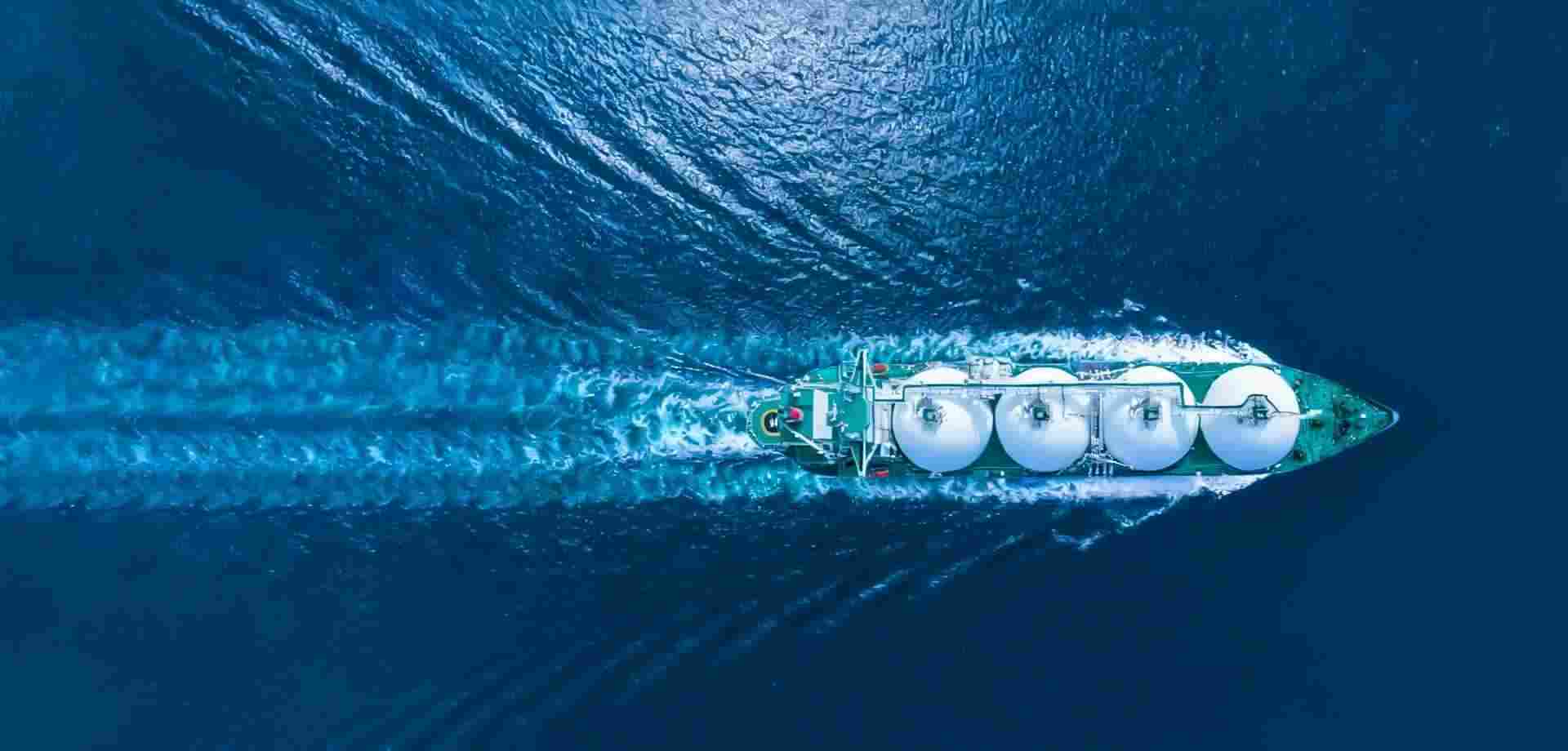
Bulk marine terminals and ISO tank container operators that handle methylene chloride must address the low boiling point and high vapor pressure through closed-loading systems and pressure-vacuum relief settings below tank design limits. The product is classified for transport as UN 1593, Class 6.1, Packing Group III, and it is moved in lined steel drums, intermediate bulk containers, or stainless steel ISO tanks; gasket materials are selected from fluoropolymer or graphite with oxidative compatibility, while EPDM and natural rubber are avoided due to swelling. Incoming inspection of a supplier lot should include comparison of the certificate of analysis against ASTM D4701 parameters, verification of the lot number on the drum or tank, and sampling from the top and bottom of the container because water ingress can create a lower aqueous layer that is not representative of the whole. Batch-to-batch variance in the nonvolatile residue is often the first indicator of a distillation upset or a change in the supplier's stabilizer package; if the residue rises above 10 ppm, the lot should be quarantined and tested for chlorinated homologs by gas chromatography. Storage tanks should be inerted with nitrogen at a positive pressure of 0.5–1.0 kPa and equipped with a closed vent to an activated carbon or condensing recovery system; open atmospheric storage is inconsistent with both exposure limits and the product's loss rate. A full supplier qualification dossier includes the ISO 9001:2015 certificate, REACH registration number, TSCA compliance statement, transport classification, SDS revision date, and method validation data for the certificate of analysis; for pharmaceutical use, the dossier must also include the USP-NF monograph or equivalent pharmacopeial conformance and a change notification agreement. Published data for the full supplier-specific stabilizer package composition is generally limited, so the receiving site should not rely on the safety data sheet alone for process compatibility decisions.